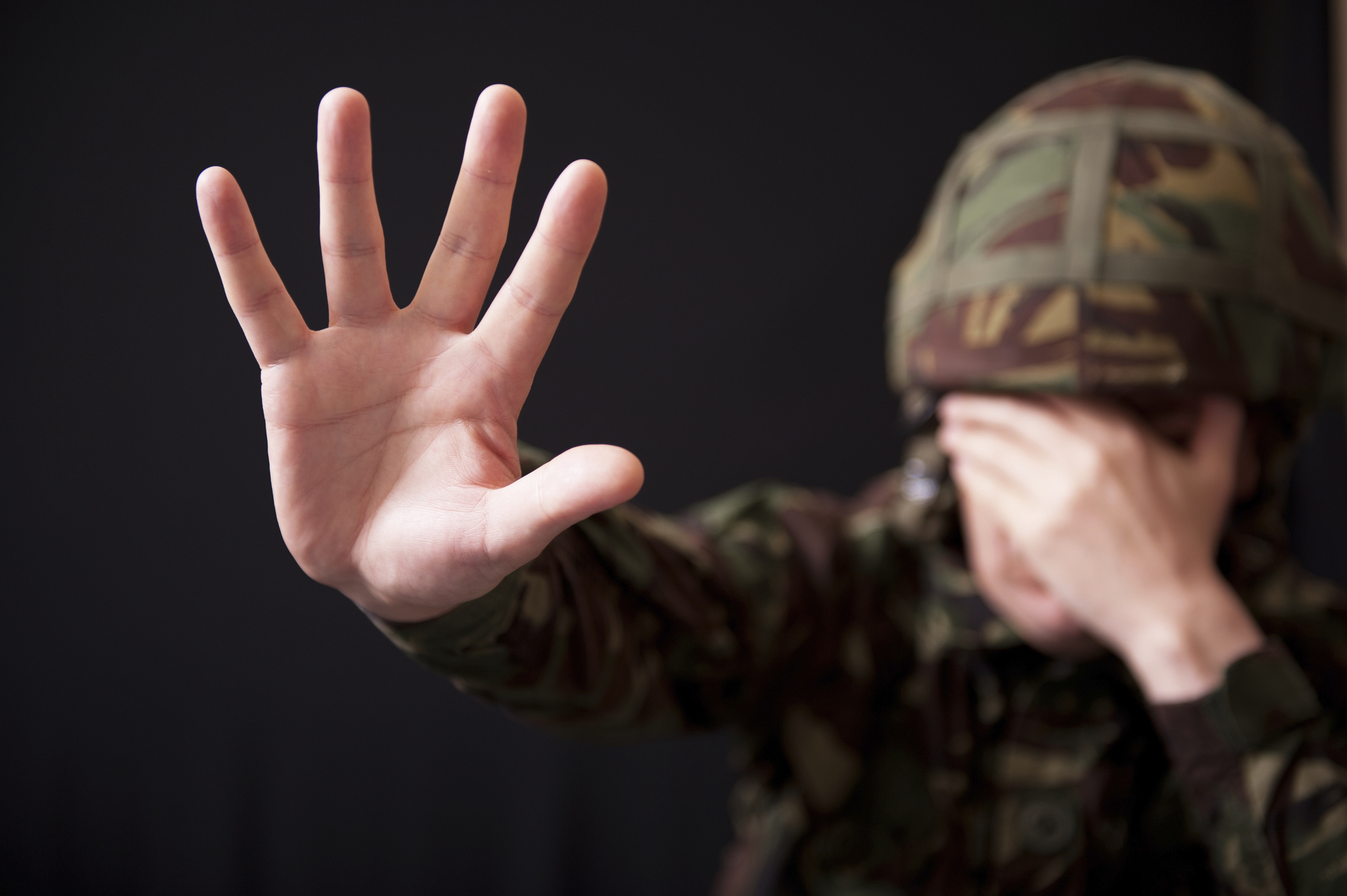
Time doesn’t heal all wounds, not by a long shot.

Just ask any of a number of Veterans of the Vietnam war when they have completed their first Trauma Sensitive Yoga class after feeling like they are still in the war zone for the past few decades (click here to watch). Or you could read or listen to any of the works of Professor Bessel Van Der Kolk (pictured here with me earlier this year) where he talks about the traumatised person being ‘hijacked by their past’ as though they are still living in the same traumatic moments that changed their lives. This results in the person being ‘very aware of the past yet with no awareness of the present moment’.
Post Traumatic Stress Disorder (PTSD) physically changes the structure of the human brain, BUT the brain is plastic – it is a dynamic changing organ that can be healed with the right treatment modalities. The symptoms that occur in humans after trauma are a series of ‘predictable physiological responses’ (I’m paraphrasing Dr Diane Poole Heller here) that are typical and expected and with the right treatment, recovery is natural and choice less. The right treatment modalities are not: sleeping medications which often have huge impacts on quality of life (feeling groggy through the day), cognitive behavioural therapy (which allows the traumatised person to become dissociative i.e. numb to their story), self-medication with alcohol and other drugs or avoidance. There have been numerous credible scientific studies using brain scans which conclusively show that when used as a therapeutic adjunct for trauma and PTSD, Yoga physically changes the structure of the brain to bring it back to a fully functional system regardless of how long ago the trauma occurred. Two great sources are: the Boston Trauma Center and the PILOTS database (PILOTS is an acronym for Published International Literature on Traumatic Stress and was created by the U.S. Government Veterans Affairs Department (VA) and by the way, the VA have 50 offices in USA that offer free regular Yoga classes…). Incidentally there are thousands of studies which have analysed the health benefits of Yoga. A great place to start is here: Dr Timothy McCalls website (Dr McCall is a board certified doctor who uses Yoga as a primary therapy).
Lets take a look at two therapeutic adjuncts which can empower traumatised individual (and their loved ones because as my wife says ‘PTSD bleeds into families’) to be an ‘agent in their own healing’ (Bessel Van Der Kolk) These are: Yoga Nidra (click here for a brief Yoga Nidra practice video) and Trauma Sensitive Yoga (click here for a brief Trauma Sensitive Yoga practice video).
Yoga Nidra is essentially a method of guided sequential body relaxation, allowing the person to experience a significant somatic (felt by your body) sense of relief. The primary outcomes from consistent Yoga Nidra practice are: restful sleep (often during the practice which is an excellent short term benefit), the opportunity to ‘step out’ of you day to day life and day to to day mind chatter which often has the nice side effect of giving people a fresh perspective on the things that they are coping with and the development of an inner resource (which can have a profoundly life-changing effect on the person). Some people fall asleep during Yoga Nidra practices and I never ever ever discourage this (some even bring their own pillows and blankets, which I love), particularly in my sessions with Veterans and clients who are grieving. For Veterans this can very commonly be the only sleep they get that isn’t induced by taking a tablet, and not only does this have a profoundly relaxing effect (and an acknowledgment of feeling rested) in the short term, it helps the person develop an inner resource which they begin to identify with as a place they can go when they feel their (often predictable) PTSD symptoms arising. Recognising this inner resource with the flow on effect of hope for the future is potentially the catalyst that can change the life of a person who feels like depression and anxiety are their ‘new normal’.
There are three clinically proven components of using Trauma Sensitive Yoga (click here to watch a video outlining Trauma Sensitive Yoga) to heal from trauma: choices, interoception and shared synchronised movement with other beings.
Choices – because typically at the forefront of the traumatic event/s is a lack of power or control over the outcome of the event.
Interoception – because in order to survive and live with the memory (as well as shame and guilt) of the trauma, the traumatised person will allow themselves to become numb to feelings, because it upsets them/triggers flashbacks, which have physical reminders such as: racing heartbeat, dry mouth, and/or loss of concentration or short term memory.
In Western society, from a very early age we are conditioned not to express our feelings. ‘Boys don’t cry’, ‘Don’t get angry’. So we lose touch with ourselves and our ability to express ourselves. Where does that leave a person with PTSD. It leaves them with no option but to avoid feelings and to be dissociative and numb to feelings which are upsetting them. How can we change this in our culture? I don’t really know the answer to that, but I do know that my contribution begins at home with my children and I hope that I can communicate this to any of the clients that I work with.
Additionally, mental health professionals using treatment modalities such as Cognitive Behavioural Therapy literally make the client numb and dissociative which does nothing to help the person work through the traumatic event/s.
Interoception is the ability of the person to focus on sensations from within the body. Hunger is an example of interoception as is common muscle soreness from working out at the gym. Incidentally exteroception is the ability to bring the focus outside the body (for example right now as you are reading this blog) and proprioception is the ability of an individual to sense their position in the space surrounding them.
Shared synchronised movement with other beings – helps to contradict the isolation which the traumatized individual insidiously chooses for themselves due to factors such as:

-A perception that people don’t understand how they feel or believe that their story is worthy of the symptoms they are experiencing
– Avoidance of activities that trigger their symptoms
-The medial prefrontal cortex being offline and preventing appropriate and meaningful interactions with others (especially with loved ones – hence the high rate of divorce and homelessness amongst veterans
-The amygdala (which acts like a smoke detector for the person) shifting into overdrive and triggering fight or flight adrenaline responses to threats that don’t exist, such as generally harmless crowds at the shopping centre or heavy traffic. There have been a large number of scientific peer reviewed studies in the US which show a direct correlation to improvements in test subjects after 10 weeks of synchronised body work activities such as: Yoga and Tai Chi.
-Areas of the brain which are essential in order for a person to enjoy an authentic joyful life (specifically the left hemisphere and medial prefrontal cortex) go offline and the area of the brain which is required to allow a person to communicate their story or journey (Brocco’s area) goes offline during flashbacks. As the medial prefrontal cortex guides our interactions with the people around us, if that area is offline, relationships (particularly with their partner) will be challenging and anyone not aware of the reason for this would dismiss the person as ‘rude’ or ‘painful to deal with’.
-Other areas of the brain go into hyper drive such as the amygdala. It senses threats which aren’t necessarily threats such as crowds or heavy traffic and assigns responses from the emotional right brain hemisphere and the primitive brain (which controls heart rate, breathing and other essential survival functions). Our brains are designed with a negative bias. It’s a crucial survival mechanism. Here’s how it works: as you walk around outside, you see a stick. The primitive part of your brain says ‘it’s a snake, be careful’. The analytical brain says ‘nope, it’s just a stick’. And so you keep on walking. Shut off the analytical brain (like during trauma and in particular during flashbacks) and this leaves the person in a permanent state of ‘fight or flight’, over-use of adrenaline and eventually adrenal fatigue where the person has a racing heartbeat, is jumpy or easily startled, rapid shallow breathing and feeling perpetually exhausted yet ‘wired’ for action. This feeling of exhaustion will impact activities of daily living such as choosing fast foods or quick to cook meals which have low nutritional content over nourishing foods that make take longer to prepare. Additionally, the effect of feeling exhausted all the time means that the person would most likely take the easiest option when it comes to physical activity (elevator instead of stairs, driving to places that are within walking distance from home etc).
But don’t just take my word for it. Click here to listen to my mate Tim Thomas talk about his own experiences with adrenal fatigue and PTSD after his deployments to Afghanistan as an Australian Commando Officer, and his crucial work with other Veterans with PTSD. If what Tim has to say resonates with you click here to watch a powerful 5 minute video about his journey.
What other insidious aspects of PTSD help to make it so cruel to human being experiencing it and those around them?
1. The concept that their future is laden with hidden dangers. Add in some feelings of shame and guilt to the traumatised brain and without help, the transition to becoming suicidally depressed can be dangerously simple.
2. The person typically doesn’t acknowledge the fact that they have PTSD. A human brain with it’s analytical functions and ability to interact with others offline can’t run a ‘self-test on start up, so they will can’t analyse the situation and will typically live in denial. When many people hear the acronym PTSD they conjure up an image of a Vietnam Veteran who stays at home in his dressing gown all day and never leaves the house for fear of flashbacks and ducking for cover if a car backfires. So it is understandable that few people would be brave enough to acknowledge having such an awful illness (of course this isn’t the fault of any veteran, when soldiers came home from Vietnam they were persecuted by the public and after years of struggling with government agencies would be given a payout which many of them sadly used to drink themselves to death). The person may take years to see a specialist and be correctly diagnosed. In the meantime, the loved ones who are struggling to be around them are gradually pushed away.
3. I’m going to be paraphrasing Richard Miller PHD here (creator of the iRest Integrative Restoration program which is simply Yoga Nidra that was adapted/re-branded for the US Military in a time when Yoga was ‘not manly enough’ but in the past 25 years has literally helped thousands of trauma sufferers to live the authentic happy life which is our birthright). Often once the person is diagnosed with PTSD they go through a phase of acceptance and coming to a realisation (incorrectly yet understandably, because the intelligent areas of the brain are shut off and to the person they feel incomplete) that ‘something is wrong’, which soon transitions to ‘something is wrong with me’. This fuels any previous feelings of shame and guilt as the person no longer feels whole or complete. In what is called our ‘deficiency story’ people will often feel and say ‘something was taken away from me that day’ or ‘my innocence was taken after that event’ or ‘everything changed and I can never go back to how I was’.
4. You can tell someone with PTSD that “everything is going to be ok” until you’re blue in the face, but the reality is that until they have a transformational moment (one of the goals of therapeutic adjuncts like Trauma Sensitive Yoga and Yoga Nidra) and they acknowledge and embrace their experiences as a part of their authentic journey and their future, those well meaning words may not be heard/understood/acknowledged by the person. This may be frustrating for family members. Sometimes these words are used by people because of their discomfort in talking about the depth or extent of PTSD that the person that they love is going through.
Watch this space for more to come about the traumatised individual being empowered to be an ‘agent in their own healing’ (Bessel Van Der Kolk).
In the meantime here is some recommended reading (or listening on audio books/YouTube):
The Body Keeps the Score – Professor Bessel van der Kolk
The iRest Program for Healing PTSD – Richard Miller PHD
Tribe: on homecoming and belonging – Sebastian Junger
That’s all from me for now Yogis.
Feel free to get to reach out to me and let me know what you think, I would love to hear from you!
Charles Stevenson
Owner & Head Teacher
Healing Energy Yoga
www.healingenergyyoga.com