

It’s a topic that’s rapidly gaining popularity, but what do we really know about supporting our hormones? We’re often told to eat a balanced diet, to exercise regularly, to get adequate sleep, to manage stress, and to keep the body well hydrated. But what should we eat, how should we exercise, how much sleep is enough, how do we manage stress, and how much water should we really be drinking? It seems that just as the topic of hormones gains attention, our lack of adequate understanding on the subject also becomes apparent.
A hormone imbalance is one of the most common health conditions women face today. Research indicates that over 90% of visits to the doctor by women are related to underlying hormone issues, and 75% of young girls today experience problems associated with menstruation (Nag et al. 2013).
A lack of adequate knowledge on the subject has resulted in women suffering unnecessarily through the symptoms, and without proper diagnosis. As a result, we are now experiencing higher rates of hormonal related complications such as endometriosis, with one in 10 women being diagnosed with this condition (Endometriosis Australia, 2016).
Most women are unaware of the symptoms of a hormone imbalance. Symptoms like period pain, irritability, bloating, irregularities, weight gain and acne are often assumed to be a normal part of the menstrual cycle. Very rarely are women taught what is normal, what to expect, or even how to nurture the female body throughout the varying stages of the cycle.
In today’s fast paced, and competitive society we are often conditioned into thinking it a weakness to slow down, to rest, or honour the menstrual process. Most women turn to painkillers to enable them to carry on with their busy lives without a second thought of what the body may be trying to communicate. Or, perhaps more significant pain intervention is required in the way of prescription drugs, or hormonal therapies such as intrauterine devices, oral contraceptives, or implanon.
What women aren’t being told is that these methods are not curative, but simply help manage some of the pain and discomfort experienced (Weiser et al. 2007). Hormone based therapies release synthetic hormones into the body, with the intention of improving symptoms. However, the body is unable to adequately metabolise these hormones, which begin to contribute to the underlying problem of a hormone imbalance. Recent studies are now alerting us to the detrimental effects of synthetic hormones on our mental health and well-being (Klaiber et al. 1996, Skovlund et al. 2016).
The Science of Yoga As a Therapy
Just as stress levels continue to escalate amongst society, alternative health care is also gaining popularity. More and more people are looking towards natural therapies to help improve their health.
Yoga therapies is slowly gaining recognition amongst the medical community for its therapeutic and healing benefits. Yoga therapy is a holistic practice that addresses the entire individual—including the mind, body, and spirit. The past few decades have seen an increase in the quantity and quality of scientific research in academic journals on Yoga as a therapeutic intervention (Payne et al. 2015, Bussing et al. 2012). Research is now available on the effects of yogic intervention on mental health conditions, cardiovascular disorders, pulmonary disease, immune response and more recently in cancer trials (Payne et al. 2015, Bussing et al. 2012, Khalsa 2004). In particular, yoga is proving highly effective in managing menstrual disorders including chronic pain and irregularities, and in improving hormone function (Riley 2004, Kanojia et al. 2013, Nag et al. 2013, Saxena et al. 2017).
Yoga and Hormone Balance
Hormones are not only important for our ability to react appropriately to stress, but they manage our reproductive system, digestive system, our sleep cycles, growth and repair system, and our immunity. A hormone imbalance can occur as a result of the food we eat, stress, lack of sleep, inadequate nutrition, chemicals within our environment, poor digestion, or as a result of a immune disorder. Whilst the symptoms of a hormone imbalance may go undetected, if left untreated it can manifest into larger complications, such as PCOS, endometriosis, fibroids or cysts, or other fertility problems.
According to Ayurveda, the ‘sister science’ of yoga, each of the major systems in the body need to be operating efficiently to ensure optimum health of the body. Each of these “systems” are delicately associated with the other. For example, the endocrine, circulatory and digestive systems all need to work effectively to ensure healthy hormone balance.
To maintain healthy hormones, it’s important to work into the digestive organs, the circulatory system, the respiratory system along with the endocrine systems. Yoga asana, pranayama, meditation and even diet and nutrition have the ability to meet each of these requirements.
For example, yoga twists gently cleanse and remove toxins from the digestive organs. Back-bending asanas stretch into the abdominal muscles, lifting and toning the muscles along the spine, opening the chest and improving circulation throughout the body. Pelvic hip-openers improve circulation to the reproductive organs, reducing inflammation and improving functionality of the endocrine glands. Chest and heart openers, whilst paired with pranayama (breathing techniques) improve respiration and lower stress levels. Meditation techniques are scientifically proven to not only lower stress, lower blood pressure, improve biofeedback cycles, but also improve circulation into the hypothalamus and pituitary gland in the brain that regulate hormone production (Swami Satyananda Saraswati 2013).
More specifically, research is finding certain yoga poses beneficial in alleviating chronic menstrual pain and irregularities (Saxena 2017, Rakhshaee, Z. 2011).
Where To From Here
Given hormonal imbalances have become one of the leading underlying health concerns in women today, educating women in terms of the symptoms is important. Very few women are aware of the symptoms of a hormone imbalance, or what is normal or abnormal within a menstrual cycle.
Dr Alison Howes, founder of Devi Shakti Yoga believes knowledge is power, and teaches women how to understand and support their bodies naturally through yoga asana, pranayama, meditation, diet and nutrition.
Whilst yoga gains momentum in the West as a popular physical activity, many people aren’t aware of the incredible health benefits of yoga. Devi Shakti Yoga integrates scientific research and understanding of the female body with Yogic Therapies to work deeply into the organs and glands involved in hormone production.
Positive results are emerging regarding yoga therapies and the ability to manage hormone conditions such as endometriosis, PCOS, thyroid disease and other fertility complications. However this form of yoga is still very much in it’s infancy, despite being based on a 3000 year old practice.
It’s exciting times in the field of yoga as an alternative therapy. With the application of modern science methodologies, such as molecular biological assays and brain imaging scans, researchers now have the ability to elucidate the full benefits of yoga, leading to further quantifiable research.
Most current medical research remains largely focussed on the treatment of symptoms through pharmaceuticals or surgery. However, as we become more aware of the complex integration between mind, body and spirit as a whole, we are likely to continue to see an advancement in Yoga as a scientific therapy to many health conditions.
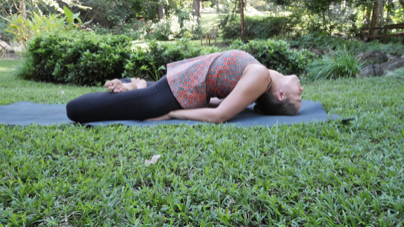
Matsyasana—Fish pose. This beautiful backbend helps improve circulation, digestion and hormone function. It restores circulation and flexibility to the hip joints and pelvis, and helps to alleviate the build up of tensions that may contribute to fibroid tumours, uterine and ovarian cysts and even menstrual cramps.
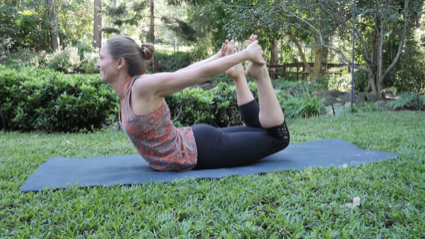
Dhanurasana– Bow Pose massages the liver, abdominal muscles, pancreas, the kidneys and the adrenal glands.The reproductive and digestive organs are also reconditioned helping to alleviate gastrointestinal disorders, constipation, sluggishness of the liver, diabetes, and menstrual disorders.
Dr Alison Howes, Devi Shakti Yoga.
If you’re interested in learning more about Devi Shakti Yoga or the heath benefits of yoga for women, contact Dr Alison Howes at [email protected],
www.devishakti.org
References:
Bussing, A., et al. 2012. Effects of yoga on mental and physical health. A short summary of reviews. Evidence-based Complementary and Alternative Medicine. July. Article ID 165410
Endometriosis Australia 2016. https://www.endometriosisaustralia.org/
Kanojia, S. et al. 2013. Effect of yoga on autonomic functions and psychological status during both phases of menstrual cycle in young healthy females. Journal of Clinical and Diagnostic Research. Vol. 7, Iss. 10. pp. 2133—2139
Khalsa, S.B.S. 2004. Yoga as a therapeutic intervention. A bibliometric analysis of published research studies. Indian Journal of Physiology and Pharmacology. Vol 48.3 pp. 269—285
Klaiber. E. L., et al. 1996. Individual differences in changes in mood and platelet monoamine oxidase (MAO) activity during hormonal replacement therapy in menopausal women. Psychoneuroendocrinology Vol 21. Is 7. pp. 575—592
Nag et al. 2013. Effect of yoga on primary dysmenorrhea and stress in medical students. Journal of Dental and Medical Sciences. Vol 4, Iss 1, Pp 69—73.
Payne. L., et al. 2015. Yoga therapy & integrative medicine. Where ancient science meets modern medicine. Basic Health Publications Inc.
Riley, D. 2004. Hatha yoga and the treatment of illness. Alternative Therapeutic Health Medicine. Vol 10.pp 20—21.
Salleh, M.R. 2008. Life event, stress and illness. Malaysian Journal of Medical Science. Vol 15, Iss, 4. pp. 9—18
Saxena, R. et al., 2017. Effects of yogic intervention on pain scores and quality of life in females with chronic pelvic pain. International Journal of Yoga. Vol. 10. Is. 1 pp. 9—15
Skovlund, C.W., et al. 2016. Association of hormonal contraception with depression. JAMA Psychiatry Vol 73. pp. 1154—1162
Wieser, F., et al. 2007. Evolution of medical treatment for endometriosis: back to the roots? Human Reproduction Update Vol. 13, No. 5. pp 487—499

Awesome post! Keep up the great work! 🙂